
Call us now :08045801660
 Send Inquiry
 Send Inquiry
Puritied Water Storage And Distribution System
MOQ : 1 Piece
Puritied Water Storage And Distribution System Specification
- Recycle Rate
- Up to 99%
- Feature
- CIP/SIP capability, zero dead-leg design, sanitary valves, bacterial vent filter
- Flow Rate
- Up to 10,000 LPH
- Noise Level
- < 70 dB
- Water in conductivity
- <50 S/cm
- Frequency
- 50/60 Hz
- Usage & Applications
- Pharmaceuticals, Biotechnology, Laboratories, Hospitals
- Technology
- RO, EDI, Ultrapure Filtration integrated
- Ph Level
- 6.5-7.5
- Efficiency (%)
- Up to 99%
- Power Consumption
- 2-7 kW (depending on model)
- Water Out Conductivity
- <1 S/cm
- Pump Type
- Sanitary food-grade centrifugal pump
- Material
- Stainless Steel
- Water Source
- Borewell/RO/DM Water
- Voltage
- 220-240 V
- Purity Level
- Ultra-pure, up to 18 Mcm
- Volume
- 500-10000 Liters (customizable)
- Power Source
- Electric
- Product Type
- High Purity Water Storage System
- Drive Type
- Electric
- Automatic Grade
- Semi Automatic
- Filter Type
- Multi-stage cartridge filter
- Capacity
- 500 LPH - 10000 LPH
- Installation Type
- Skid mounted
- Control System
- PLC/HMI based control panel
- Bacterial Endotoxin Level
- <0.25 EU/ml
- Disinfection
- UV sterilizer included
- Vent Filter
- 0.2 micron hydrophobic PTFE
- Temperature Range
- 5°C to 45°C
- Sanitization Method
- Hot Water or Chemical
- Compliance
- GMP/USFDA/WHO
- Level Sensor
- Electronic, high and low level alarm
- Surface Finish
- Mirror polish internal, matt external
- Connections
- Tri-clamp with silicone gaskets
Puritied Water Storage And Distribution System Trade Information
- Minimum Order Quantity
- 1 Piece
- Payment Terms
- Cash in Advance (CID)
- Supply Ability
- 9 Pieces Per Month
- Delivery Time
- 3 - 4 Days
- Main Domestic Market
- All India
About Puritied Water Storage And Distribution System
To store purified water that has been treated to remove all impurities & minerals used our High Purity Water Storage System. The system is typically made up of a storage tank or vessel made of high-quality materials that do not react with the purified water, & it may include various components such as valves, gauges, as well as sensors to monitor the quality & quantity of the stored water. The High Purity Water Storage System must be designed & maintained carefully to prevent contamination of the purified water & ensure that it remains in a state of high purity.
Advanced Water Purity and Safe Storage
Engineered to deliver ultra-pure water with a conductivity below 1 S/cm, this system ensures reliable storage and supply for demanding applications. The inclusion of a 0.2-micron hydrophobic PTFE vent filter, UV sterilization, and a hot water or chemical sanitization method guarantees microbial control and water integrity throughout distribution.
High-Efficiency Operation with User-Friendly Control
With a fully automated PLC/HMI-based panel, users can monitor and manage water quality and system status in real time. Supported by high and low electronic level sensors and alarms, operations are simplified, reducing manual intervention and risk of human error while optimizing efficiency and resource usage.
Hygienic, Durable Design for Diverse Applications
Constructed from stainless steel, featuring internal mirror polish and tri-clamp connections with silicone gaskets, the system is easy to clean and resistant to corrosion. The zero dead-leg, skid-mounted equipment minimizes risk of contamination, maximizes system lifespan, and supports diverse usage across pharmaceuticals, biotech, labs, and hospitals.
FAQs of Puritied Water Storage And Distribution System:
Q: How does the system ensure ultra-pure water quality for pharmaceutical use?
A: The system combines multi-stage cartridge filtration, reverse osmosis (RO), EDI, and ultrapure filtration technologies to achieve purity up to 18 Mcm and water conductivity below 1 S/cm. Additional features like UV sterilization, 0.2-micron PTFE vent filters, and hot water or chemical sanitization maintain compliance with strict GMP/USFDA/WHO standards.Q: What is the process for sanitizing the storage and distribution system?
A: Sanitization can be performed using hot water or approved chemicals, ensuring the removal of microbial contaminants. The system is designed with CIP/SIP (clean-in-place/sterilize-in-place) capability, allowing for easy and effective routine disinfection without disassembly.Q: When should I perform maintenance or disinfection on this system?
A: Scheduled maintenance and disinfection intervals depend on application and usage frequency, but it is generally recommended to follow manufacturer guidelines or regulatory requirements for pharmaceuticals and labs. Routine checks incorporate high and low-level alarms and electronic sensors to prompt timely intervention when necessary.Q: Where is this system best suited for installation?
A: The system is ideal for environments that demand high-purity water, such as pharmaceutical production facilities, biotechnology labs, clinical laboratories, and hospitals. Its skid-mounted, compact design allows for flexible installation in limited or specialized spaces.Q: What benefits does the PLC/HMI-based control panel provide?
A: The PLC/HMI-based control panel offers centralized monitoring and control, allowing users to manage flow rate, monitor water levels, receive alerts for high/low alarm conditions, and ensure consistent, automated system operation for enhanced reliability and reduced human error.Q: How is water quality monitored and ensured continuously?
A: Water quality is automatically tracked through electronic sensors that monitor level, conductivity, endotoxin content, and pH. Level alarms, a UV sterilizer, and a bacterial vent filter work together to maintain water purity and safety at all times.Q: What types of water sources are compatible with this system?
A: This system can utilize borewell, reverse osmosis (RO), or demineralized (DM) water as input sources, effectively upgrading initial water quality to meet the ultra-pure requirements essential for critical applications.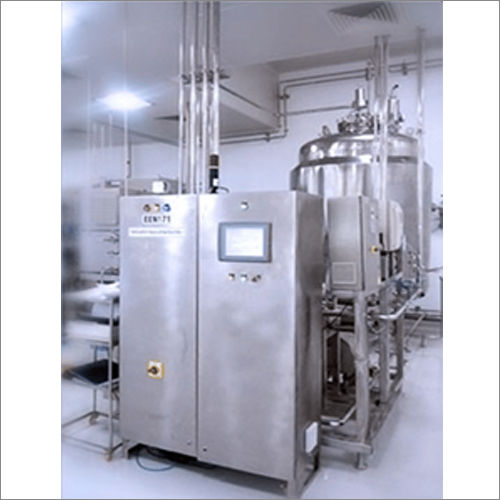
Tell us about your requirement

Price:
Quantity
Select Unit
- 50
- 100
- 200
- 250
- 500
- 1000+
Additional detail
Mobile number
Email


 Send Inquiry
Our Products
- DM Plant
- Electro Polished Tubes And Fittings
- High Purity Water Generation System
- High Purity Water Storage System
- Mixed Bed Deionization Plant
- Mixed Bed Polisher
- Ozonisation System
- Water Pre Treatment
- Pure Steam Generator
- RO EDI System
- Sanitary Heat Exchangers
- Sanitary Pumps
- SS Tanks And Housing
- WFI Generation Plant

B2/U19, A-1 Industrial Complex, Post Taluka Kaman, Vasai (East), Vasai - 401107, Maharashtra, India

 Send Inquiry
 Send SMS
Developed and Managed by Infocom Network Private Limited.
